
Why Digital Skills Matter (and How to Start Building Them)
Digital skills now shape how we study, work, do business and stay safe. Here's what they are, why they matter so much, especially in Somalia, and simple steps to start building them today.
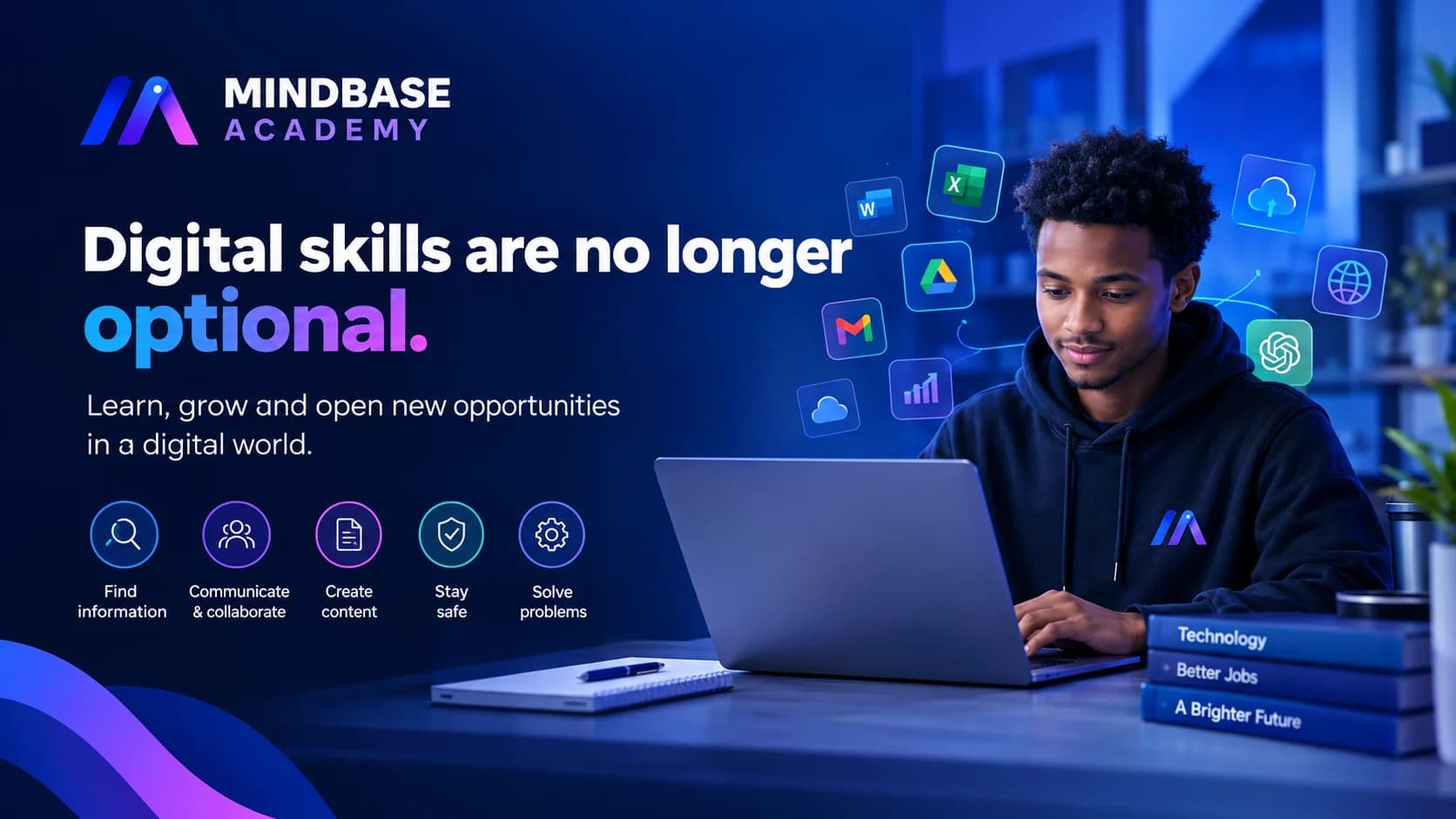
Digital skills are no longer optional. Today we study, apply for jobs, run businesses, send money and talk to family using digital tools. People who can use a computer and the internet with confidence find more opportunities, work faster and are harder to fool online. The good news: anyone can learn digital skills, step by step.
What are digital skills?
Digital skills are the abilities you need to use computers, phones, the internet and software to find information, communicate, create things and solve problems. The European Union's DigComp framework, one of the most widely used standards, groups them into five areas:
Information and data literacy: searching for information, judging whether it is reliable, and organizing files and data.
Communication and collaboration: email, messaging, online meetings and working together on shared documents.
Digital content creation: writing documents, building spreadsheets, making presentations and more.
Safety: protecting your devices, your personal data and your wellbeing online.
Problem solving: fixing everyday technical problems and choosing the right tool for the job.
Why they matter
1. Jobs and careers
Employers expect 39% of the key skills needed in the job market to change by 2030, and technology literacy is among the fastest-growing skills they look for (World Economic Forum, Future of Jobs Report 2025). In Sub-Saharan Africa, the IFC estimates that 230 million jobs will require digital skills by 2030. Whether you want to work in an office, a bank, a hospital, a school or your own business, basic computer skills are now part of the job.
2. Education
Assignments, research, online courses and university applications all happen on a computer. Students who can type, search effectively, organize their files and use tools like Word, Excel and Google Docs save time and produce better work.
3. Business and money
Somalia already has one of the most active mobile money markets in the world: the World Bank found that 73% of people aged 16 and over use mobile money. Businesses that also keep records in Excel, design price lists in Word, collect orders with Google Forms and market themselves online can grow faster and serve more customers.
4. Getting connected
About 6 billion people (74% of the world) use the internet, but only 36% of people in Africa are online (ITU, 2025). As more of the region comes online, people with digital skills will be the first to benefit from new jobs and services. Good skills also help you get more out of every minute and every megabyte of your connection.
5. Staying safe online
Scams, fake news and stolen accounts are growing. Knowing how to create strong passwords, spot fake messages and protect your personal information keeps your money, your accounts and your reputation safe.
6. Artificial intelligence
AI tools like ChatGPT can help you write, plan, translate and learn faster. People who know how to use them well, and who check their answers, will have a real advantage at school and at work.
How to start building your digital skills
Practice a little every day. Even 20 minutes on a computer builds confidence quickly.
Learn the core tools. Word for documents, Excel for numbers, and Google Docs and Forms for working online.
Organize your files. Use clear folder names so you can always find your work.
Search smarter. Use precise keywords and check information on more than one trusted website.
Protect your accounts. Use a different strong password for each important account and turn on two-step verification.
Use AI tools responsibly. Let them help you, not think for you, and always check the facts.
Build something real. Write your CV in Word, track a budget in Excel or create a survey in Google Forms.
Learn step by step with Mindbase Academy
Our IT Basics course takes you from the basics of computers and files to Microsoft Word, Excel, Google Workspace and everyday AI tools, in short video lessons you can follow at your own pace. Explore the IT Basics course
Further reading and free resources
World Economic Forum: Future of Jobs Report 2025: the jobs of the future and the skills you need to get them.
ITU: Facts and Figures: global statistics on who is online.
IFC (World Bank Group): Digital Skills in Sub-Saharan Africa (2019).
World Bank: Somalia Economic Update, Rapid Growth in Mobile Money (2018).
European Commission: DigComp 2.2, the Digital Competence Framework for Citizens.
Microsoft Digital Literacy: free courses on computers, the internet and online safety, also in Arabic.
LearnFree (formerly GCFGlobal): Computer Basics: free beginner tutorials.
Elements of AI: a free introduction to artificial intelligence for beginners, from the University of Helsinki.